My temperature sensor does not fit
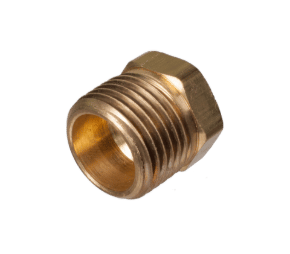
If the threads are wrong, you will need an adapter that changes your port to 1/8" NPT. We have some available, ensure you verify it is the right one.
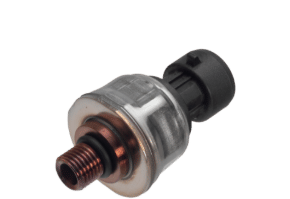
If the sensor fits the threads but is too long, you can try trimming it up to but NOT past the notch. Trimming past the notch will damage the sensor. If it still does not fit, you can get a radiator hose adapter with a 1/8" NPT port.
My temperature gauge is not working!
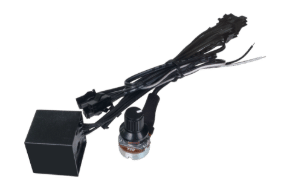
If you have just installed the gauge, ensure you are using the sensor provided as other sensors will not work.
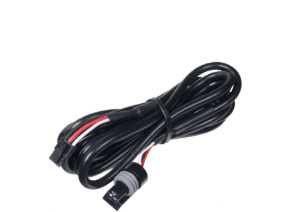
If the gauge does not sweep on startup, it is not getting power. Verify the red, white, black power harness is connected properly.
If it sweeps but is not reading at all, ensure the signal harness is connected and pressed in firmly on both sides.
If it's still not working, test the signal harness for continuity with a multimeter. If you have both probes on the metal terminal and it reads "OL" or 0 ohms, the harness is bad. Call or email us to get a replacement harness. You can put paperclips in the harness connector if needed to get a good contact point.
If the harness is testing good, the next step is to measure ohms coming from the sensor while it is warm. Refer to the chart below, if the ohm reading is close to 0 or it's an OL, you need a new sensor. We recommend reading the ohms at the gauge side to verify it is getting to the gauge.
Temp Sensor Resistance Chart
| Temp C | Temp F | Resistance
(Ohms) |
|---|
| 60 | 140 | 238 |
| 65.55 | 150 | 199 |
| 71.11 | 160 | 168 |
| 76.66 | 170 | 144 |
| 82.22 | 180 | 125 |
| 87.77 | 190 | 108 |
| 93.33 | 200 | 94 |
| 98.88 | 210 | 82 |
| 104.44 | 220 | 71 |
| 110 | 230 | 61 |
| 115.55 | 240 | 51 |
| 121.11 | 250 | 43 |
| 126.66 | 260 | 36 |
My pressure gauge is not reading right!
Ensure you are using our sensor, most other sensors will not work with our gauges.
With the harness disconnected from the sensor and the gauge powered on, measure the voltage across the red and black wires in the harness at the sensor end. Here you should see 4.9-5 volts.
Once you have confirmed the voltage, short the red wire to the white wire, this should make the gauge sweep full scale.
With the harness still disconnected from the sensor, go to key-on or start the car. With the sensor disconnected the gauge should stay at 0 or the bottom of the scale.
If all those turn out normally, next we'll test the sensor. Disconnect the harness from the gauge, and reconnect it to the sensor. Measure voltage between the white wire (signal from sensor) and black wire (ground) and you should see a range between 0.5 to 4.5 volts. You will need to supply power and ground to the sensor while it's disconnected from the gauge. You can use short paperclip pieces if needed.
The Temperature Sender that uses a single yellow wire running from the gauge does not read correctly!
The sender and gauge must be grounded to the same source to operate correctly.
The sender's ground path is its mounting threads. Ensure that what the sender is threaded into is grounded to the same source as the gauge.
Use Teflon paste on the sender threads to secure the seal and maintain a secure ground connection. Teflon tape will NOT assist the ground connection.
Why does my Water Temperature Gauge read high when compared to a Temperature Gun reading?
Making a comparison to a Temperature Gun reading should be used as a basic comparison only. A temperature gun only measures surface temperature, and does not measure internal temperature. Surface temperature will always be cooler than the coolant inside the engine. A common temperature difference would be between 5 and 25 degrees, between the water temperature gauge and a temperature gun. This depends on the efficiency of the component being shot with the temperature gun to dissipate heat. So, if your gauge reads 195 and you point & shoot and get a reading of 185, you can safely assume that you are seeing a reasonable, and realistic comparison. Only use a temperature gun to make basic temperature comparisons. Understand, that when everything is working correctly, the gauge will usually read higher since the gauge measures core temperature, and the temperature gun measures surface temperature.